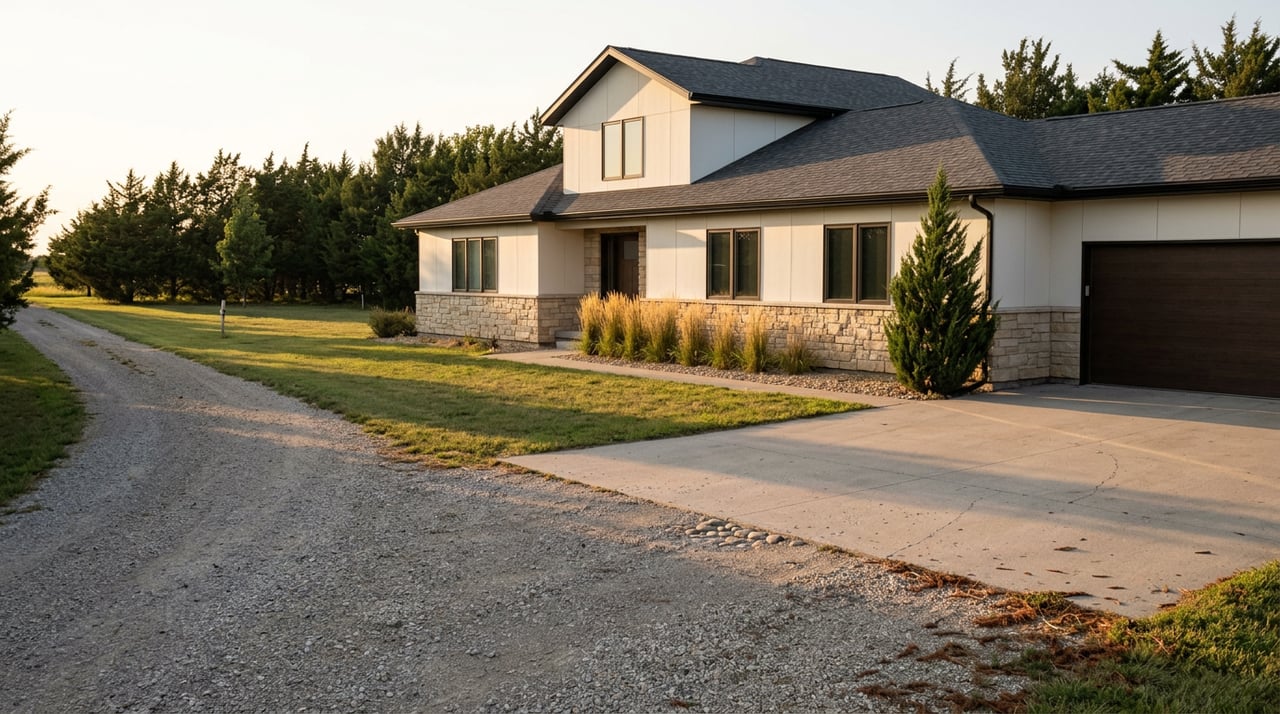
In June 2025, the Fremont County Building Department logged a routine permit: a septic field addition at 1270 J Street in Penrose, priced at $283 plus a $23 state surcharge. Nothing dramatic. Somebody's leach field needed more capacity, a licensed installer filed the paperwork, the county signed off. That single line item sits inside a stack of records most sellers never think to open before they list.
They should. Because the story those records tell isn't the one most Penrose sellers expect.
The Rule Nobody Mentions Because It Isn't Famous
Colorado has no single statewide law forcing a septic inspection every time a house changes hands. That part is true, and it's the version of the story that circulates most widely online. What gets left out is that the state's Water Quality Control Commission adopted Regulation 43 back in 2013, setting minimum design and setback standards for every on-site wastewater system in Colorado, and then handed enforcement to the counties. Each county was free to build stricter rules on top of that floor, and many did.
The counties that show up in nearly every online guide to this topic are the same handful: Boulder, Jefferson, Larimer, El Paso. They're populous, they get written about, and search results reflect that. Fremont County rarely makes the list, but its own On-Site Wastewater Treatment System regulations include a section titled, plainly, "Transfer of Title Inspections." It sits on page 27 of Fremont County's official OWTS regulations, right alongside the county's rules on permit renewals and enforcement.
In other words, a Penrose seller who searches "which Colorado counties require a septic inspection to sell" and sees the big four Front Range names might reasonably conclude their county isn't one of them. That assumption is wrong, and it's the kind of gap that doesn't surface until a title company asks for paperwork nobody scheduled.
What the County's Own Records Show
Every month, the Fremont County Building Department publishes a log of septic permits issued, complete with addresses, permit types, and fees. The June 2025 report is representative of the pattern. That month, the county issued 21 total permits: 10 for new systems, 7 for repairs, 3 renewals, and 1 chemical toilet permit, generating $4,139 in fees and $391 in state surcharges. Zoom out to the first half of 2025 and the totals were 51 new systems, 23 repairs, 7 renewals, and 4 chemical toilets, for 85 permits and $18,155 collected.
| Permit Type | H1 2025 Count | Share of Total |
|---|---|---|
| New systems | 51 | 60% |
| Repairs | 23 | 27% |
| Renewals | 7 | 8% |
| Chemical toilets | 4 | 5% |
Repairs and renewals together account for more than a third of everything the county processed in the first half of 2025. That matters for a specific reason. It means a meaningful share of Fremont County's septic activity isn't happening on brand-new builds. It's happening on systems that already existed, already had a permit history, and needed something adjusted before they could keep operating cleanly. A field addition like the one at 1270 J Street doesn't happen to a system that's working perfectly. It happens to one that's been asked to do more than it was originally sized for, which is common on older acreage parcels where a bedroom got added, a barn became a bunkhouse, or a second household moved onto the property.
If your Penrose home has been through any of that, the paperwork trail matters as much as the physical hardware.
Why Penrose Adds a Wrinkle the Suburbs Don't Have
Here is where the county-wide story becomes a Penrose-specific one. Current listings around town make the pattern obvious: parcels running from 3 to 40 acres, ranch-style and farmhouse construction, and water setups that go well beyond a single tap. It isn't unusual to find a property connected to municipal water for the house while also carrying one or two private wells for livestock and irrigation. One recent Penrose listing described exactly that: municipal water to the home, plus a dedicated livestock well in addition to a domestic one.
Regulation 43 requires a minimum 100-foot setback between a well and a septic leach field. On a quarter-acre suburban lot with one well and one septic system, a transfer inspection checks that distance once. On a Penrose hobby farm with a domestic well near the house and a second well out by the barn, the inspector has to confirm that both wells clear the setback, and so does any outbuilding tied into the wastewater system. More wells and more structures simply means more places where an old, informally sited well or a leach field expanded without a permit can trip the inspection.
This is the piece that rarely gets mentioned in generic "how to sell a house with a septic system" guides written for a statewide audience. They're not wrong about the inspection requirement. They're just describing a single-well property, which isn't what most Penrose acreage looks like.
Sellers whose homes were built or expanded decades ago, before anyone was tracking bedroom counts against system capacity, are the ones most likely to find a mismatch between what the permit says and what the property actually has. Fremont County's regulations, like most counties', tie system capacity to bedroom and fixture counts. An extra bedroom that was never reflected in an updated permit is exactly the kind of gap a transfer inspection is designed to catch.
None of this means a Penrose sale is doomed to delay. It means the inspection deserves an earlier place on the calendar than most sellers give it.
Who to Call, and When
The good news is that Fremont County's Building Department, at 615 Macon Avenue, Room 212 in Cañon City, handles both septic and well permitting under one roof. A single call to the office, at 719-276-7460, can confirm whether your parcel's well and septic permits are on file and current before you ever put a sign in the yard.
You also may not need to import help from Cañon City or Colorado Springs. Fremont County's published roster of licensed septic installers and pumpers has listed contractors based right in Penrose, including Frank Rhodes and Robert Adamson Construction, working out of County Road 67 and Top Notch Trail respectively. Confirm current licensing status with the county when you call, since rosters change, but local, acreage-familiar help has historically been available without leaving town.
The transfer inspection isn't the obstacle. Discovering it two weeks before closing is.
A practical order of operations for a Penrose seller:
- Pull your property's existing septic and well permit records from the county before listing.
- Confirm the bedroom and fixture count on file matches the home as it exists today, including any additions or outbuildings tied into the system.
- Schedule the transfer inspection with a Fremont County licensed contractor as soon as the home goes on market, not after an offer arrives.
- If the property has more than one well, verify each one independently against Regulation 43's setback distance before the inspector does it for you.
A Few Questions Penrose Sellers Ask
Does this apply if my Penrose home is on municipal water instead of a well? Yes. The transfer of title inspection concerns the wastewater system, not the water source, so a septic system triggers it regardless of whether your household water comes from a well or a municipal line.
What if my property has more than one well? Every well on the parcel needs to clear the required setback from the leach field, not just the one closest to the house. This is the detail that catches Penrose sellers with dual-well setups off guard.
Who pays for the inspection, the buyer or the seller? In most Colorado counties that require this inspection, the responsibility to arrange and pay for it falls to the seller, since it's tied to the property leaving their ownership. Contract terms can shift that, so it's worth confirming with your agent and title company early rather than assuming.
How long is the transfer document valid once issued? Other Colorado counties set expiration windows anywhere from six months to a year. Fremont County's Building Department can confirm the current window at the time you apply, since they're the office issuing the paperwork.
Selling acreage in Penrose comes with more moving parts than a standard in-town listing, and the septic and well paperwork is one piece that rewards getting ahead of it. If you're weighing a sale and want a straight read on what your specific property will need before it hits the market, The All Star Team can walk through it with you in plain terms, in English or Spanish, and help you get your free home valuation and local market plan before you list.